Studio
The room.
A walk through the studio, in the order a record moves through it: the room you sit in, the path the signal takes, and the microphones it starts with.
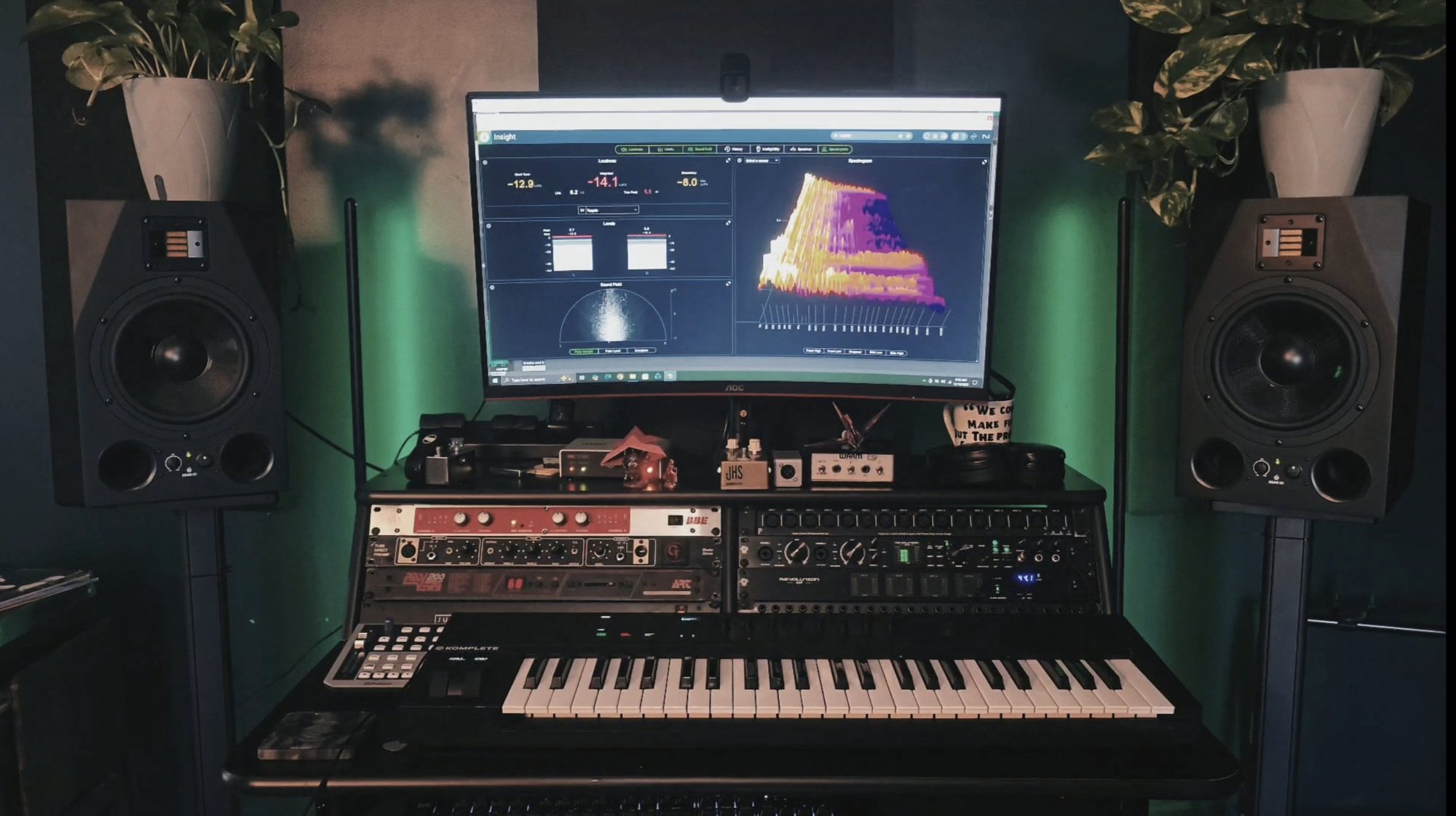
01 · The room
Built to hear the truth.
The mix room is treated and measured, with monitors that do not flatter. That is the point of it. A record finished here should translate: the car, the earbuds, the venue PA, the pressing plant. When something is wrong in the low end or the vocal sits a hair too far back, you hear it in this chair before anyone else does.
It is a working room. The guitars on the wall get played. The records on the shelf get referenced. The cat has opinions.
- Monitoring
- ADAM A8X, room-corrected, with subwoofer
- Conversion
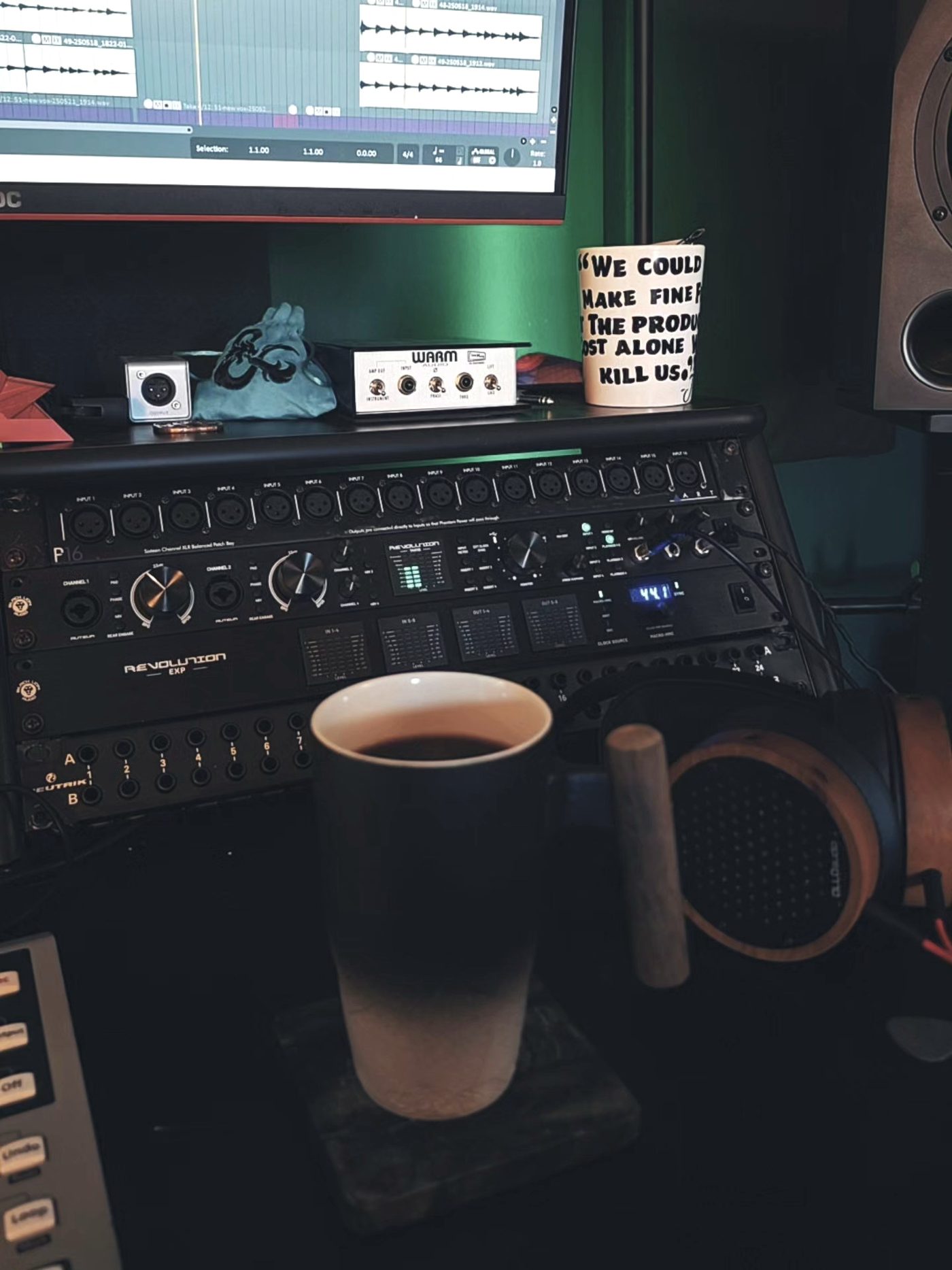
- Black Lion Audio Revolution 14x16 + EXP
- Tape
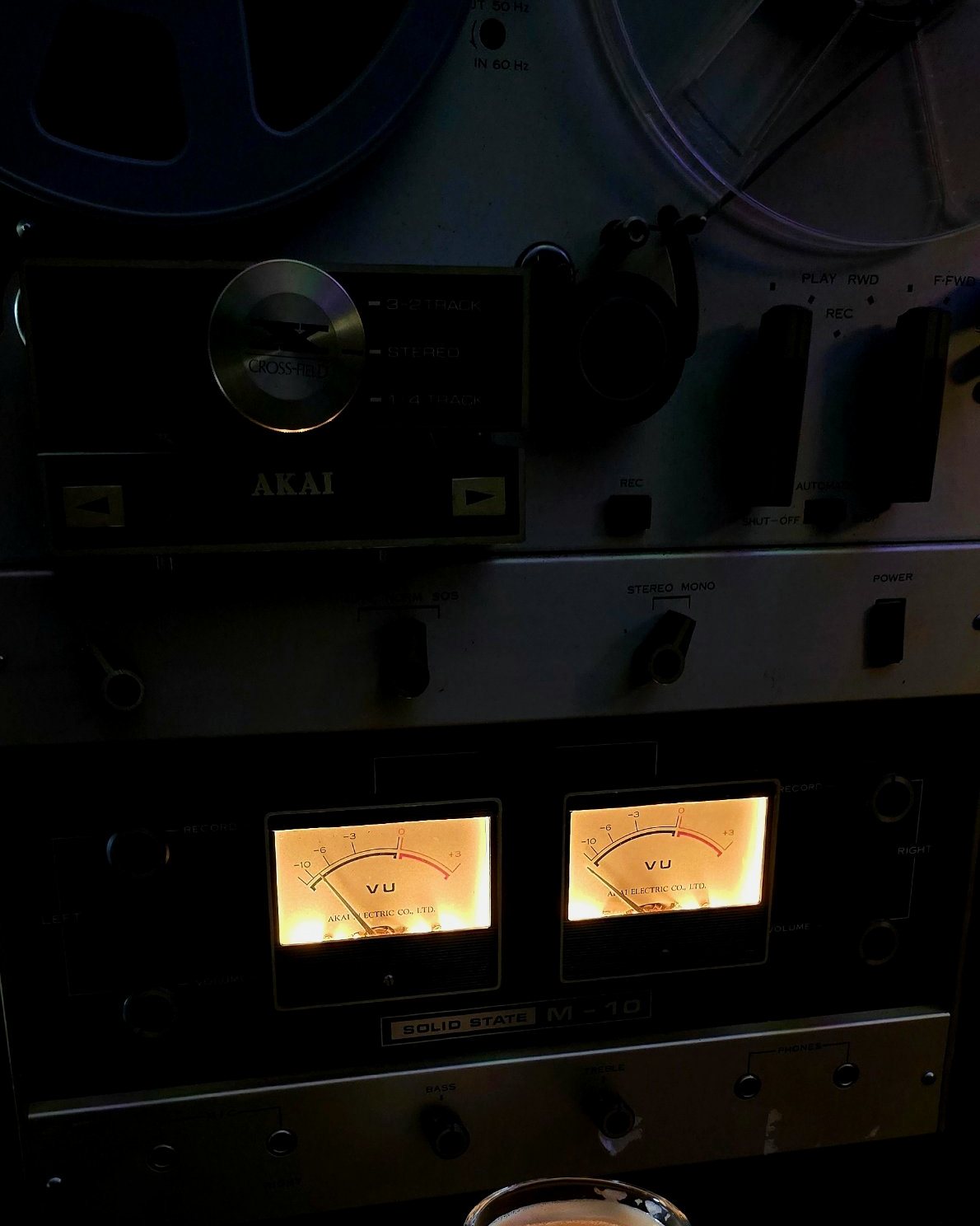
- Akai crossfield reel-to-reel, in the chain
- Dynamics
- 1176-style FET compression, outboard
02 · The path
One line, source to speaker.
Analog where it changes the sound. Digital where it protects it. Every stage is here because I can hear what it does.
I
Source
The performance, the instrument, the room around it. Get this right and everything after is easier.
II
Preamp
Transformer and discrete preamps chosen per source, so the color is a decision and not an accident.
III
Tape
Real tape when the record wants it: rounder transients, a little glue, the sound of a machine doing its job.
IV
Conversion
Clean, clocked, honest conversion in and out. What went to tape comes back the way it left.
V
Monitoring
Corrected monitors and a measured room. The last link is the one you make decisions with.
03 · The locker
Ninety years of microphones.
A microphone is a point of view. The locker runs from the 1930s to now so a source can be heard through the one that suits the song, not the one that was closest.
Shure Brothers 730B
For voices that want a little history. Narrow, forward, unmistakable.
Shure 520 Green Bullet
Harmonica, of course. Also the vocal that needs to come through a telephone.
Warm Audio WA-47jr and WA-87 R2
The everyday large-diaphragm pair. Vocals, acoustic guitar, room.
Shure SM7B and Super 55
Loud singers, guitar cabinets, and the one that looks the way it sounds.
Slate ML-1 and ML-2s
Modeling capsules for when the song calls for a microphone the locker does not hold.
The full locker, preamps, and outboard list are available on request. Ask in the inquiry and it comes with the quote.
04 · What happens here
Start to finish, or the part you need.
I.
Recording
Singles through full records. Live tracking for bands that play together, overdubs, vocal sessions.
II.
Mixing
Tracks in, mixes out. Sessions recorded elsewhere are welcome. Bring the record you heard in your head.
III.
Mastering
Finished for streaming, vinyl, or both, on monitors that tell the truth about it.
Ready when you are
Come hear it.
The fastest way to know if this room is right for your record is to talk about the record.